Phosphate in Surface Water Streams, Lakes, and Ponds
Total Phosphorus and Phosphate Impact on Surface Waters
Phosphate Cycle
Phosphorus occurs naturally in rocks and other mineral deposits. During the natural process of weathering, the rocks gradually release the phosphorus as phosphate ions, which are soluble in water, as the mineralized phosphate compounds break down.
Phosphates PO₄⁻³ are formed from this element. Phosphates exist in three forms: orthophosphate, metaphosphate (or polyphosphate) and organically-bound phosphate; each compound contains phosphorous in a different chemical arrangement. These forms of phosphate occur in living and decaying plant and animal remains, as free ions in aqueous systems, absorbed to sediments and soils, or as mineralized compounds in soil, rocks, and sediments.
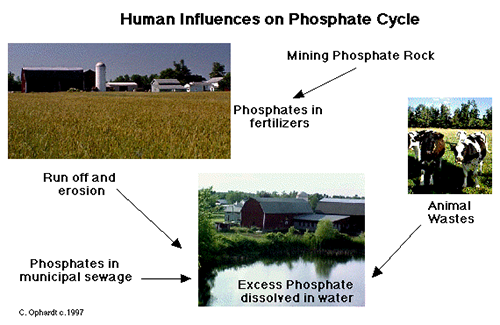
Orthophosphate forms are produced by natural processes, but major man-influenced sources include: partially treated and untreated sewage, runoff from agricultural sites, and application of some lawn fertilizers. Orthophosphate is readily available to the biological community and typically found in very low concentrations in unpolluted waters. Poly forms are used for treating boiler waters and in detergents. In water, they are transformed into orthophosphate and available for plant uptake. Organic phosphates are typically estimated by testing for total phosphate. The organic phosphate is the phosphate that is bound or tied up in plant tissue, waste solids, or other organic material. After decomposition, this phosphate can be converted to orthophosphate.
Phosphate rock in a commercially available form is the mineral apatite and this mineral is also present in fossilized bone or bird droppings called guano. Apatite is a mineral family of phosphates containing calcium, iron, chlorine, and several other elements in varying quantities. The most common variety contains fluorine, and fluorapatite is the main constituent in bones and teeth! Huge quantities of sulfuric acid are used in the conversion of the phosphate rock into a fertilizer product called "super phosphate" (the phosphate in apatite is not readily available to plants; treating the apatite with sulfuric acid converts it into a form, orthophosphate, that is readily available)
Small amounts of certain condensed phosphates are added to some water supplies during treatment to prevent corrosion and this chemical is used extensively in the treatment of boiler waters. Larger quantities of these compounds can be found in laundering and commercial cleaning fluids. Orthophosphates applied to agricultural or residential lands as fertilizers are carried into the surface water during storm events or snow melt. In addition, storm events can cause the vertical migration of the phosphates into the groundwater system, but because of the affinity of soils for phosphate (it adsorbs onto the soil particles), the soil mantle acts as a storage medium for phosphate.
Why is Phosphorus Important?
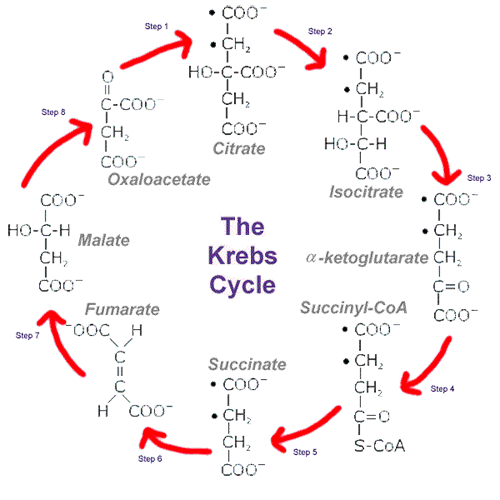
Phosphorus is one of the key elements necessary for the growth of plants and animals and in lake ecosystems it tends to be the growth-limiting nutrient; it is a backbone of the Krebs Cycle and for the manufacture of ATP (adenosine triphosphate) and DNA. The presence of phosphorus is often scarce in well-oxygenated lake waters and, importantly, the low levels of phosphorus limit the production of freshwater systems (Ricklefs, 1993). Unlike nitrogen, phosphate is retained in the soil by a complex system of biological uptake, absorption, and mineralization.
Phosphates are not toxic to people or animals unless they are present at very high levels. Digestive problems could occur from extremely high levels of phosphate. The soluble or bio-available orthophosphate is then used by plants and animals. The phosphate becomes incorporated into the biological system, but the key areas include ATP, DNA, and RNA. ATP, adenosine triphosphate, is important in the storage and use of energy and a key stage in the Krebs Cycle. RNA and DNA are the backbones of life on this planet, via genetics. Therefore, the availability of phosphorus is a key factor controlling photosynthesis.
Photosynthesis - KEY Factor At the Base of the Food Chain
Photosynthesisis a complex series of reactions carried out by algae, phytoplankton, and the leaves in plants, which utilize the energy from the sun. The simplified version of this chemical reaction is to utilize carbon dioxide molecules from the air and water molecules and the energy from the sun to produce a simple sugar such as glucose and oxygen molecules as a by-product. The simple sugars are then converted into other molecules such as starch, fats, proteins, enzymes, and DNA/RNA, i.e., all of the other molecules in living plants and animals. All of the organic compounds of a plant or animal are ultimately produced as a result of this photosynthesis reaction. The net equation describing photosynthesis is:
Environmental Impact
Phosphate will stimulate the growth of plankton and aquatic plants which provide food for larger organisms, including zooplankton, fish, humans, and other mammals. Plankton represents the base of the food chain. Initially, this increased productivity will cause an increase in the fish population and overall biological diversity of the system. But as the phosphate loading continues and there is a build-up of orthophosphate in the lake or surface water ecosystem, the aging process of lake or surface water ecosystems will be accelerated. The overproduction of lake or water bodies can lead to an imbalance in the nutrient and material cycling process (Ricklefs, 1993). Eutrophication (from the Greek - meaning "well nourished") is enhanced production of primary producers resulting in a reduced stability of the ecosystem. Excessive nutrient inputs, usually nitrogen and phosphate, have been shown to be the main cause of eutrophication over the past 30 years. This aging process can result in large fluctuations in the lake water quality and trophic status and in some cases periodic blooms of cyanobacteria.
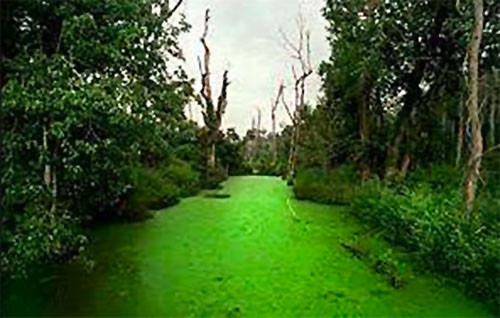
Algae Bloom
Harveys Lake, Luzerne County, Pennsylvania
In situations where eutrophication occurs, the natural cycles become overwhelmed by an excess of one or more of the following: nutrients such as nitrates, phosphates, or organic waste containing these nutrients. The excessive inputs, usually a result of human activity and development, appear to cause an imbalance in the "production versus consumption" of living material (biomass) in an ecosystem. The system then reacts by producing more phytoplankton/vegetation than can be consumed by the ecosystem. This overproduction can lead to a variety of problems ranging from anoxic waters (the decomposition of the excess organic matter in the water greatly lowers the dissolved oxygen content of the water) to toxic algal blooms, adecrease in diversity andfood supply, and habitat destruction. Eutrophication as a water quality issue has had a high profile since the late 1980s, following the widespread occurrence of blue-green algal blooms in some fresh waters. Some blue-green algae can at times produce toxins, which are harmful to humans, pets, and farm animals.
Under aerobic conditions (presence of oxygen), the natural cycles may be more or less in balance until an excess of nitrate (nitrogen) and/or phosphate enters the system. At this time, the water plants and algae begin to grow more rapidly than normal. As this happens there is also an excess die-off of the plants and algae as sunlight is blocked at lower levels. Bacteria try to decompose the organic waste, consuming the oxygen, and releasing more orthophosphate which is known as "recycling or internal cycling.” Some of the phosphate may be precipitated as insoluble iron phosphate and stored in the sediment where it can then be released if anoxic conditions develop.
In anaerobic conditions (absence of oxygen), conditions worsen as more phosphates and nitrates are added to the water; all of the oxygen may be used up by bacteria in trying to decompose all of the waste. Different bacteria continue to carry on decomposition reactions, however, the products are drastically different. The carbon is converted to methane gas instead of carbon dioxide and sulfur is converted to hydrogen sulfide gas. Some of the sulfide may be precipitated as insoluble iron sulfide (pyrite). Under anaerobic conditions, the iron phosphate precipitates in the sediments may be released from the sediments, making the phosphate bioavailable. This is a key component of the growth and decay cycle. The pond, stream, or lake may gradually fill with decaying and partially decomposed plant materials to make a swamp, which is the natural aging process. The problem is that this process has been significantly accelerated.
Non-Point Sources of Phosphate
The non-point sources of phosphates include: natural decomposition of phosphate-containing rocks and minerals, stormwater runoff, agricultural runoff, erosion and sedimentation, atmospheric deposition, and direct input by animals/wildlife. Point sources may include wastewater treatment plants and permitted industrial discharges. In general, non-point source pollution typically is significantly higher than point-sources of pollution. Therefore, the key to sound management is to limit the input from both point- and nonpoint-sources of phosphate.
The annual loading of phosphate and nitrogen by source to the Chesapeake Bay.
Plants may not be able to utilize all of the phosphate fertilizer applied. As a consequence, although phosphate has a stronger affinity to binding with the soil compared to nitrogen, much of it is lost from the land through erosion. The phosphate enters the aquatic ecosystem and becomes tied up in the biogeochemical system where it is recycled. The rapid growth of aquatic vegetation and/or increase in the algal population can cause the death and decay of vegetation and aquatic life because of the decrease in dissolved oxygen levels. A large percentage of the phosphate in water is precipitated from the water as insoluble iron phosphate or stored in partially-decomposed organic material. Through a combination of microbiological action and anoxic conditions, the phosphate may be readily recycled back into the water for further reuse causing the mass of phosphate to build up in the ecosystem. In deeper aquatic environments, the phosphate may be stored in the sediments and then recycled through the natural processes of lithification, uplift, and erosion of rock formations.
Blue-Green Algae
Blue-green algae (or cyanobacteria) are small single-celled prokaryotic (having no nucleus or organelles) microorganisms, only a few microns (µm) long. When present in large groups or blooms, these algae appear as a blue-green discoloration in the water. This type of algae is usually found in freshwater and are most common in areas with high levels of nutrients and warm, sunny, and calm conditions. Many blue-green algae grow attached to the surface of rocks and stones (epilithic forms), on submerged plants (epiphytic forms), or on the bottom sediments (epipelic forms, or the benthos) of lakes. Some species of blue-green algae produce chemicals that are harmful to both animals and humans. These algal blooms have been linked to health problems ranging from skin irritation to liver damage to death, depending on the type and duration of exposure. The livelihood of many fish, shellfish, and livestock has also been endangered through contact with this toxin. In addition to causing animal and human health concerns, large amounts of blue-green algae can literally suffocate organisms by depleting the water of life-sustaining oxygen by causing hypoxic or anoxic conditions.
Unicellular and filamentous blue-green alage are almost invariably present in freshwater lakes, frequently forming dense planktonic populations or water blooms in eutrophic (nutrient rich) waters. In temperate lakes, there is a characteristic seasonal succession of the bloom-forming species, due apparently to their differing responses to the physical-chemical conditions created by thermal stratification. Usually the filamentous forms (Anabaena species, Aphanizomenon Flos-aquae and Gloeotrichia echinulata) develop first soon after the onset of lake stratification in late spring or early summer, while the unicellular-colonial forms (like Microcystis species) typically bloom in mid-summer or in autumn. The main factors which appear to determine the development of planktonic populations are light, temperature, pH, nutrient concentrations, and the presence of organic solutes.