Wilkes University Environmental Education, water quality testing, drinking water test kits, earth environmental sciences, geosciences, environmental engineering, Training Monitoring

Wilkes University
Center for Environmental Quality
Environmental Engineering and Earth Sciences Department
http://www.water-research.net


Field Methods in Applied Geosciences
(Soil Sciences, Hydrology, Hydrogeology)
Pennsylvania Based - University Training Course- 2008

Soil Morphology- 2007 Class


Hydric Soils- 2007 Class

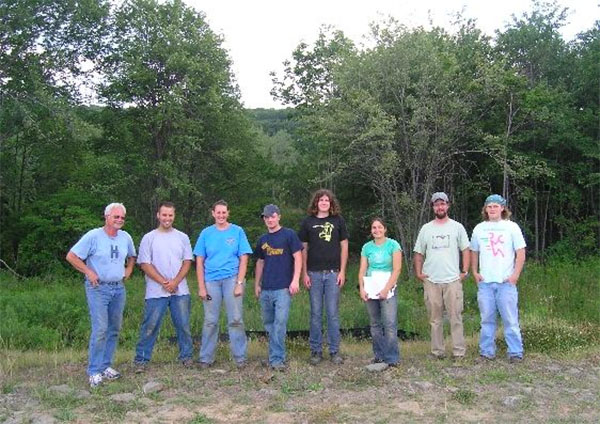
THE 2007 - Graduation Class- GOOD JOB TEAM !

Class was a Great Experience - The class included 4- Graduate Students,
Local Environmental Consultants,
and our Undergraduate Students
 

YES - We will have at least 2 courses in the summer of 2008

Introduction to Soil Science and Morphology (2 credit) and
Introduction to Hydric Soils (2 credit) !


Main Instructor: Mr. Brian Oram, PG
Phone Office: 570-408-4619
Website: http://www.water-research.net
Office Location: SLC 276b
(Stark Learning Center)
email: brian.oram@wilkes.edu
Office: 570-408-4619
cellphone: 570-332-8053

Course Instructors:   Dr. Sid Halsor, PG,  Mr. Brian Oram, PG, and  Mr. William Toothill


Course I:  Introduction to Soil Science and Morphology - EES 394P/ EES 498
May 27 - May 30, 2008  (4 days)- please email
brian.oram@wilkes.edu

Course Number:  EES 394P*- undergraduate credit (2 credit)   - CRN Number -20444(Important Numbers - Please Record)
Course Number:  EES 498P* - advanced undergraduate or possibly graduate credit (2 credit)  CRN Number - 20445 (Important Numbers - Please Record)
Course is also available for Continuing Education Credit.


Course II: Hydric Soils Course - EES 394B/ EES 498 B
July 14, 15, and 16 (3 days)- please email
brian.oram@wilkes.edu

Course Number:  EES 394B*- undergraduate credit (2 credit)   - CRN Number -20447(Important Numbers - Please Record)
Course Number:  EES 498B* - advanced undergraduate or possibly graduate credit (2 credit)  CRN Number - 20446(Important Numbers - Please Record)
Course is also available for Continuing Education Credit.


Details on the Summer Offering, Cost, and Schedule for Wilkes - go to  http://www.wilkes.edu/pages/447.asp
The Summer Schedule can be downloaded as an Excel Spreadsheet from the webpage listed.


Course I: Introduction to Soil Science and Morphology - EES 394P/ EES 498
 

The Course !

The primary focus of the course will be to provide an strong introduction to applied soil science, geology, GIS/GPS and hydrology to undergraduates, graduates, and professionals with a science background.   During the course, we will discuss soil science, soil morphology, applications of soil science to stormwater and on-site wastewater disposal, redoximorphic features, hydric soils, regional geology, soil hydrology, obtain hands one use of GIS/GPS equipment, and use field water quality monitoring equipment. 

There is a lot going on in one week.  In the past we have offered this as a 10 day course with a lot of positive feedback.  It will be great to have you, but please be prepared to learn, work, and be part of the team.

What to bring !

Be ready for field work - bug spray, boots, rain gear, notebook, pencils, digital camera, etc.  If you have a Soil Munsell Chart, Soil Knife, Screwdriver, Waterproof Notebook, Stop Watch, coring tools - Bring it along !

Wetland Guys/ Gals - bring your resource materials. We will not be discussing wetlands - but we will discuss Hydric Soils- The site will be using has already been delineated.

Course Textbook

At this point, there will be no course textbook to purchase, but there will be a series of handouts, powerpoint presentations, and a field manual for the course.  There will be no additional charge for these materials.  During the course, I may suggest purchasing certain reference materials - I will have examples for field use

Grading

Your course grade is up to you.  If you work hard and show effort, it will not only show in your grade, but you will walk-away from the course with a better understanding or even better more questions.  I like to run the course as if the class was one research team or consulting group.  All the members of your class are your team and your team will be consulted to determine your effectiveness as a “team player”.  This will be included in your field conduct grade. Therefore, work together as a team, maintain a field notebook, ask questions, and participate !  There will be no final exams or quizzes.

Graduate Credit Option - THE 498 OPTION !!! (Please consider !)

Individuals looking for graduate credit - will need to complete a "term" paper and confirm that your program will accept the course for graduate credit.  The paper can focus on any topic approved by an instructor.  The general guidelines for the paper is that it should be at least 10 pages, excluding references and supporting materials.  Following the course, you will have three weeks to complete your paper.  Paper topics can be approved prior to the course !

Possible topics for a paper:

1) The relationship between geology and geological change on soils.
2) Soil and suitability for land-based wastewater disposal.
3) Use of GIS/GPS in Environmental Applications
4) Regional Geology of the Wyoming Valley

Proposed Schedule - Directions to Wilkes -
(For Individuals Off-Campus I will try to get Visitor Pays for the Week)

Day 1: On-campus at Wilkes University- Meet Stark Learning Center - SLC 435 (4th floor)

Morning: Meet the Team, Meet the Instructors, Introduction to Field Safety, Environmental Applications to Soil Science, and Introduction to Soil Formation Processes and Introduction to Our Project Site


Homework- Review Soil Morphology Manual

Day 1: Field Day


soil scientists, environmental engineers, field training courses, environmental science field course


Morning: Evaluating Soil Test Pits and Soil Probes in Upland Areas and Wetland Areas and Introduction to Hydric Soils  (Hydric Soils will be a separate 3 day course - Course II -Hydric Soils Course - EES 394B/ EES 498 B - July 16, 17, and 18 )

Afternoon: Evaluating Soil Test Pits for Suitability for On-lot Wastewater Disposal and Stormwater Infiltration - the Percolation Test, Infiltration Testing, and Saturated Permeability Testing


Infiltration Testing
Flooded Double Ring

horizontal permeability, hydroconductivity, vertical permeability, borehole permeability, field training geosciences soils, piezometer

Vertical Permeability Testing

Homework- Review On-lot Wastewater Disposal Alternatives Guidelines for PA
PA Perspective on Onlot or Land-Based Wastewater Disposal - please review and bookmark. Website is a work in Progress.

Day 2: Field Day - Dr. Sid Halsor, PG -http://www.wilkes.edu/pages/526.asp
Lastest News on Dr. Halsor - http://www.wilkes.edu/pages/194.asp?item=2290

GIS, GPS, environmental engineering, geospatial analysis, geography, geology, geologist, global positioning system, geographic inforamtion systems, data management, applications soil science
Dr. Sid Halsor and Mr. Bill Toothill

Morning: Local and Regional Geology  and Tour of Local "Environmental Clean-up Site"

Afternoon: Geological Field Measurements, Introduction to GPS Positioning

Homework - Review Guidelines for Stormwater Infiltration.

Day 3: Field Day - Introducing Mr. Bill Toothill (GIS Wizard !)


Trimble GPS, GPS training, field training course, hydric soil mapping, wetland delineation, global positioning systems, surveying, mapping, monitoring
GPS Training in the Lab and Field

Morning: Training in Collecting GPS (Global Position Systems) Data (Field)

Test Site # 1
Prepare Detailed Soil Morphological Descriptions or Evaluation of Hydric Soils

Test Site # 2
Installing Wells and Piezometers - What is the difference?
Field Demonstration - Measuring Redox Potential (If I can purchase the equipment- cross you fingers !)


percolation testing, environmental monitoring, training course workshops, hydrogeology, hydrology, groundwater flow, geology, geologist
Percolation Testing

soil permeability, groundwater, water table, piezometer installation, peizometers, water wells, groundwater monitoring
Wetland Monitoring - Well / Piezometer
Hydric Soils - Wetland Soils Monitoring


Rest of the Data - Field Data will be collected using GPS Equipment !

Homework - Get some sleep !


Day 4: Field and Office Day

Morning - Field Training Opportunity - Make Up Day! or Introduction to GIS !

Afternoon- Introduction to GIS  and Engineering Applications to Soil Science and Geology Discussion and Course Summary- Update GIS Layers and Conducting and environmental analysis to determine general suitability for land-based disposal and stormwater management.

Day 5 - After the course, optional open form discussion.  Off-campus - Keep in Mind it is Friday (TGIF) - The Course is Over !

Resources
Field Guide Book version 2 (pdf)
Describing Soil Texture - " Feel Method" (pdf)
Describing Soil Structure (pdf)
Describing and Grading Soil Structure (pdf)
Permeability Classes for Soils (pdf)|
Drainage Classes for Soils (pdf)


Check out the Following Websites
Environmental Engineering and Earth Sciences

Center for Environmental Quality

Other Training Opportunities
 

For More information about the Environmental Quality Center, please contact:

 Attn: Mr. Brian Oram, Professional Geologist (PG)
Laboratory Director
Wilkes University
 Environmental Engineering and Earth Sciences
PO Box 111
84 West South Street
Wilkes-Barre, PA 18766
(570) 408-4619

Home | Technology Outreach Program |  Drinking Water Help Guides | Contact Us
 Available Test Parameters   
 Research Interests, Funded Research and Applied Research 
  Homeowner Information Water Testing
 Environmental Topics - Infiltration, Soils, 
 Wellhead Protection, Groundwater, Watersheds
 PowerPoint Presentations

Watershed Monitoring, Research, Training,
Lake and Watershed Studies, Volunteer Monitoring Programs


 The Water Library - Pdf files on Water Issues and Topics
 Tools for Undergraduate Students
 Field Training and Workshops in Earth Science
 Affiliations and Hot Links