Methyl Tertiary Butyl Ether MTBE- Well / Groundwater Contamination Issues
What is MTBE?
Methyl tertiary butyl ether (MTBE) is made from methanol and is a by-product of the oil refining process; it was added to gasoline in an attempt to make gas burn cleaner, but studies show it has had little effect on curbing air pollution. An ether, in general, is a compound containing an oxygen atom bonded to two carbon atoms (an oxygen bridge). In methyl tertiary-butyl ether (also known as methyl t-butyl ether or MTBE), one carbon atom is that of a methyl group, -CH3, and the other is the central atom of a tertiary butyl group, -C(CH3)3. At room temperature, MTBE is a volatile, flammable, and colorless liquid that is highly soluble in water; MTBE is 28 times more soluble in water than benzene. MTBE will diffuse in water 8.6 times faster than benzene. This will allow MTBE to spread laterally faster than the other hydrocarbons, creating a wider and longer contaminant plume.
MTBE is 2.6 times more volatile than benzene but MTBE is also 42 times more soluble in water than benzene is. The Henry’s Law Constant is the ratio of the concentration of a volatile compound in air divided by its concentration in water. MTBE has a Henry’s Law constant, 0.024, much lower than that of benzene which means that water will absorb MTBE vapors much more readily than it will benzene vapors, all of which means that MTBE is much more likely to contaminate water in greater quantities than would something like benzene.
Methyl Tertiary Butyl Ether
MTBE is manufactured by the chemical reaction of methanol, generally made from natural gas, and isobutylene. The MTBE was added to gasoline to promote more complete combustion and reduce emissions of carbon monoxide (CO) and organic compounds. The chemical adds oxygen to the gasoline, which increases the temperature at which the gasoline burns in the engines and reduces the amount of harmful byproducts in the vehicle's exhaust. Because MTBE mixes readily with gasoline, is easily transported, has a low production cost and high octane rating, MTBE has become the oxygenate of choice for most gasoline producers who face state and federal mandates to produce less-polluting gasoline. In the late 1970s, gasoline companies started adding MTBE in relatively low concentrations to gasoline to replace lead and to boost the octane rating (a measure of a gasoline's ability to resist engine knock). In about 1996, the MTBE concentration was increased to 10 to 12 percent to enhance combustion and reduce tailpipe emissions, especially in states like California that have widespread air quality problems. In 1990, in response to concerns over air pollution and aggressive industry lobbying, Congress amended the Clean Air Act to require the use of fuels which add oxygen to gasoline. MTBE is the best known oxygenate, and the one embraced by most oil companies although other oxygenates are used in some areas. Approximately 31% of all US gasoline contains MTBE and MTBE makes up about 85 % of the oxygenates used nationally; other oxygenates include: ethanol and ethanol-based ethers.
In a major setback to the oil and chemical industries, on July 27, 1999, an EPA panel recommended that MTBE be reduced in use as a gasoline additive because of the toxic hazards that MTBE poses to drinking water supplies throughout the country. MTBE is a known animal carcinogen and possible human carcinogen. The reported U.S. production of MTBE in 1992 exceeded nine billion pounds - virtually all of it is added to gasoline. Oil companies reportedly make approximately $3 billion per year from MTBE production.
MTBE Transport
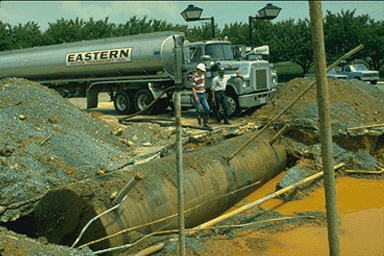
Recent testing by the U.S. Geological Survey indicated that 27 percent of the urban wells and springs tested were positive for MTBE. With its increased use, MTBE is now being found in shallow groundwater, at very low levels in some reservoirs and drinking water. The most likely sources of the groundwater contamination are leaking underground storage tanks and pipelines. Although MTBE is readily mixed with gasoline, it does not appear to be easily absorbed by soil. As a result, the MTBE moves from the leaking gasoline source into the ground where it is dissolved into the groundwater. MTBE, like other ethers, is hydrophilic; in other words, it has a chemical attraction to water molecules. It is more than thirty times more soluble in water than other toxic compounds of gasoline. When MTBE is released into the environment via transport accidents, leaking tanks, or simple over-filling at gas stations, MTBE travels great distances underground to the water table. MTBE can contaminate surface waters, but underground drinking water supplies are most at risk.
The EPA has revised its unregulated contaminant monitoring regulations to include MTBE. In 1997, the EPA released a health advisory on MTBE and indicated that at 20 to 40 ppb or less the MTBE can impart an unpleasant taste and odor to the water. This concentration is reportedly 20,000 to 100,000 times lower than the range of exposure levels in which cancer or non-cancer effects were observed in animal experiments. In 1998, MTBE was added to the
The U.S. Environmental Protection Agency has recently proposed a "health advisory" level for MTBE in drinking water of 70 parts per billion (ppb), but some states have lower interim standards. Currently, there is no regulatory maximum contaminant level for MTBE in drinking water – there is only an advisory limit. "The advisory recommends control levels that prevent adverse taste and odor (i.e. 20 to 40 parts per billion)." (Source) Common water treatment systems include air stripping, granular-activated-carbon, and advanced oxidation systems.
Note - The most likely causes of MTBE in deep groundwater are steep vertical gradients caused by extraction wells, cross contamination within the aquifer, and poorly-sealed wells.
<div class="product-note in-L4-carbon-filtration">Note: For rural Areas with <a href="/indoor-6/herbicides-pesticides">Herbicides and Pesticides</a> Usage</div>
<div class="product-note in-L6-benzene">Note: If the concentration is < 0.005 mg/L (POE Device System Component)</div> <div class="product-note in-L6-chloroform-trichloromethane">Note: If the concentration is < 0.080 mg/L (POE Device System Component)</div> <div class="product-note in-L6-ethylbenzene">Note: If the concentration is < 0.03 mg/L (POE Device System Component)</div> <div class="product-note in-L6-methylene-chloride-dichloromethane-dcm">Note: If the concentration is < 0.005 mg/L (POE Device System Component)</div> <div class="product-note in-L6-mtbe-methyl-tert-butyl-ether">Note: If the concentration is < 0.07 mg/L</div> <div class="product-note in-L6-tetrachloroethylene">Note: If the concentration is < 0.005 mg/L (POE Device System Component)</div> <div class="product-note in-L6-trichloroethylene">Note: If the concentration is < 0.004 mg/L (POE Device System Component)</div> <div class="product-note in-L6-toluene">Note: If the concentration is less than 0.8 mg/L</div> <div class="product-note in-L6-xylenes">Note: If the concentration is < 1 mg/L (POE Device System Component)</div> <div class="product-note in-L6-atrazine">Note: If the concentration is < 0.001 mg/L (POE Device System Component)</div> <div class="product-note in-L6-alachlor">Note: If the concentration is < 0.002 mg/L (POE Device System Component)</div> <div class="product-note in-L6-glyphosate">Note: If the concentration is < 0.7 mg/L (POE Device System Component)</div> <div class="product-note in-L6-2-4-d">Note: If the concentration is < 0.03 mg/L (POE Device System Component)</div> <div class="product-note in-L6-bis-2-ethylhexyl-phthalate">Note: If the concentration is < 0.006 mg/L (POE Device System Component</div> <div class="product-note in-L6-bromate">Note: If the concentration is < 0.01 mg/L (POE Device System Component)</div> <div class="product-note in-L4-methyl-tertiary">Note: Concentrations < 40 ppb</div>
<div class="product-note in-L4-carbon-filtration">Note: For rural Areas with <a href="/indoor-6/herbicides-pesticides">Herbicides and Pesticides</a> Usage</div>
<div class="product-note in-L6-benzene">Note: If the concentration is < 0.005 mg/L (POE Device System Component)</div> <div class="product-note in-L6-chloroform-trichloromethane">Note: If the concentration is < 0.080 mg/L (POE Device System Component)</div> <div class="product-note in-L6-ethylbenzene">Note: If the concentration is < 0.03 mg/L (POE Device System Component)</div> <div class="product-note in-L6-methylene-chloride-dichloromethane-dcm">Note: If the concentration is < 0.005 mg/L (POE Device System Component)</div> <div class="product-note in-L6-mtbe-methyl-tert-butyl-ether">Note: If the concentration is < 0.07 mg/L</div> <div class="product-note in-L6-tetrachloroethylene">Note: If the concentration is < 0.005 mg/L (POE Device System Component)</div> <div class="product-note in-L6-trichloroethylene">Note: If the concentration is < 0.004 mg/L (POE Device System Component)</div> <div class="product-note in-L6-toluene">Note: If the concentration is less than 0.8 mg/L</div> <div class="product-note in-L6-xylenes">Note: If the concentration is < 1 mg/L (POE Device System Component)</div> <div class="product-note in-L6-atrazine">Note: If the concentration is < 0.001 mg/L (POE Device System Component)</div> <div class="product-note in-L6-alachlor">Note: If the concentration is < 0.002 mg/L (POE Device System Component)</div> <div class="product-note in-L6-glyphosate">Note: If the concentration is < 0.7 mg/L (POE Device System Component)</div> <div class="product-note in-L6-2-4-d">Note: If the concentration is < 0.03 mg/L (POE Device System Component)</div> <div class="product-note in-L6-bis-2-ethylhexyl-phthalate">Note: If the concentration is < 0.006 mg/L (POE Device System Component</div> <div class="product-note in-L6-bromate">Note: If the concentration is < 0.01 mg/L (POE Device System Component)</div> <div class="product-note in-L4-methyl-tertiary">Note: Concentrations < 40 ppb</div>
<div class="product-note in-L4-carbon-filtration">Note: For rural Areas with <a href="/indoor-6/herbicides-pesticides">Herbicides and Pesticides</a> Usage</div>
<div class="product-note in-L6-benzene">Note: If the concentration is < 0.005 mg/L (POE Device System Component)</div> <div class="product-note in-L6-chloroform-trichloromethane">Note: If the concentration is < 0.080 mg/L (POE Device System Component)</div> <div class="product-note in-L6-ethylbenzene">Note: If the concentration is < 0.03 mg/L (POE Device System Component)</div> <div class="product-note in-L6-methylene-chloride-dichloromethane-dcm">Note: If the concentration is < 0.005 mg/L (POE Device System Component)</div> <div class="product-note in-L6-mtbe-methyl-tert-butyl-ether">Note: If the concentration is < 0.07 mg/L</div> <div class="product-note in-L6-tetrachloroethylene">Note: If the concentration is < 0.005 mg/L (POE Device System Component)</div> <div class="product-note in-L6-trichloroethylene">Note: If the concentration is < 0.004 mg/L (POE Device System Component)</div> <div class="product-note in-L6-toluene">Note: If the concentration is less than 0.8 mg/L</div> <div class="product-note in-L6-xylenes">Note: If the concentration is < 1 mg/L (POE Device System Component)</div> <div class="product-note in-L6-atrazine">Note: If the concentration is < 0.001 mg/L (POE Device System Component)</div> <div class="product-note in-L6-alachlor">Note: If the concentration is < 0.002 mg/L (POE Device System Component)</div> <div class="product-note in-L6-glyphosate">Note: If the concentration is < 0.7 mg/L (POE Device System Component)</div> <div class="product-note in-L6-2-4-d">Note: If the concentration is < 0.03 mg/L (POE Device System Component)</div> <div class="product-note in-L6-bis-2-ethylhexyl-phthalate">Note: If the concentration is < 0.006 mg/L (POE Device System Component</div> <div class="product-note in-L6-bromate">Note: If the concentration is < 0.01 mg/L (POE Device System Component)</div> <div class="product-note in-L4-methyl-tertiary">Note: Concentrations < 40 ppb</div>
<div class="product-note in-L4-carbon-filtration">Note: For rural Areas with <a href="/indoor-6/herbicides-pesticides">Herbicides and Pesticides</a> Usage</div>
<div class="product-note in-L6-benzene">Note: If the concentration is < 0.005 mg/L (POE Device System Component)</div> <div class="product-note in-L6-chloroform-trichloromethane">Note: If the concentration is < 0.080 mg/L (POE Device System Component)</div> <div class="product-note in-L6-ethylbenzene">Note: If the concentration is < 0.03 mg/L (POE Device System Component)</div> <div class="product-note in-L6-methylene-chloride-dichloromethane-dcm">Note: If the concentration is < 0.005 mg/L (POE Device System Component)</div> <div class="product-note in-L6-mtbe-methyl-tert-butyl-ether">Note: If the concentration is < 0.07 mg/L</div> <div class="product-note in-L6-tetrachloroethylene">Note: If the concentration is < 0.005 mg/L (POE Device System Component)</div> <div class="product-note in-L6-trichloroethylene">Note: If the concentration is < 0.004 mg/L (POE Device System Component)</div> <div class="product-note in-L6-toluene">Note: If the concentration is less than 0.8 mg/L</div> <div class="product-note in-L6-xylenes">Note: If the concentration is < 1 mg/L (POE Device System Component)</div> <div class="product-note in-L6-atrazine">Note: If the concentration is < 0.001 mg/L (POE Device System Component)</div> <div class="product-note in-L6-alachlor">Note: If the concentration is < 0.002 mg/L (POE Device System Component)</div> <div class="product-note in-L6-glyphosate">Note: If the concentration is < 0.7 mg/L (POE Device System Component)</div> <div class="product-note in-L6-2-4-d">Note: If the concentration is < 0.03 mg/L (POE Device System Component)</div> <div class="product-note in-L6-bis-2-ethylhexyl-phthalate">Note: If the concentration is < 0.006 mg/L (POE Device System Component</div> <div class="product-note in-L6-bromate">Note: If the concentration is < 0.01 mg/L (POE Device System Component)</div> <div class="product-note in-L4-methyl-tertiary">Note: Concentrations < 40 ppb</div>
<div class="product-note in-L4-carbon-filtration">Note: For rural Areas with <a href="/indoor-6/herbicides-pesticides">Herbicides and Pesticides</a> Usage</div>
<div class="product-note in-L6-benzene">Note: If the concentration is < 0.005 mg/L (POE Device System Component)</div> <div class="product-note in-L6-chloroform-trichloromethane">Note: If the concentration is < 0.080 mg/L (POE Device System Component)</div> <div class="product-note in-L6-ethylbenzene">Note: If the concentration is < 0.03 mg/L (POE Device System Component)</div> <div class="product-note in-L6-methylene-chloride-dichloromethane-dcm">Note: If the concentration is < 0.005 mg/L (POE Device System Component)</div> <div class="product-note in-L6-mtbe-methyl-tert-butyl-ether">Note: If the concentration is < 0.07 mg/L</div> <div class="product-note in-L6-tetrachloroethylene">Note: If the concentration is < 0.005 mg/L (POE Device System Component)</div> <div class="product-note in-L6-trichloroethylene">Note: If the concentration is < 0.004 mg/L (POE Device System Component)</div> <div class="product-note in-L6-toluene">Note: If the concentration is less than 0.8 mg/L</div> <div class="product-note in-L6-xylenes">Note: If the concentration is < 1 mg/L (POE Device System Component)</div> <div class="product-note in-L6-atrazine">Note: If the concentration is < 0.001 mg/L (POE Device System Component)</div> <div class="product-note in-L6-alachlor">Note: If the concentration is < 0.002 mg/L (POE Device System Component)</div> <div class="product-note in-L6-glyphosate">Note: If the concentration is < 0.7 mg/L (POE Device System Component)</div> <div class="product-note in-L6-2-4-d">Note: If the concentration is < 0.03 mg/L (POE Device System Component)</div> <div class="product-note in-L6-bis-2-ethylhexyl-phthalate">Note: If the concentration is < 0.006 mg/L (POE Device System Component</div> <div class="product-note in-L6-bromate">Note: If the concentration is < 0.01 mg/L (POE Device System Component)</div> <div class="product-note in-L4-methyl-tertiary">Note: Concentrations < 40 ppb</div>